
Key Takeaways:
- A dedicated e-Commerce Search Engine Optimization strategy improves your online store visibility and helps connect your products directly with ready buyers.
- Optimizing product pages, fixing technical errors, and organizing site architecture support better search rankings and higher conversion rates.
- Salterra Digital Services provides comprehensive e-commerce search engine optimization to help you scale your online sales through proven digital strategies.
E-commerce Search Engine Optimization
Building an online store is only the first step in digital retail. Finding customers is the real challenge. Many business owners launch beautiful websites but struggle to generate consistent traffic and sales. Without a clear strategy to attract shoppers, your products remain invisible to the people who want to buy them.
Salterra Digital Services helps online retailers overcome this challenge through specialized e-commerce search engine optimization. We structure your website so search engines can read it easily and shoppers can find exactly what they need. This approach builds a foundation for long-term digital growth without relying entirely on paid advertising.
By optimizing your category pages, product descriptions, and technical architecture, we help your online store compete in a crowded digital marketplace. The following sections explain how this process works, what strategies drive the best results, and how our team can help you build a more profitable online business in 2026 and beyond.
Understanding the Value of eCommerce SEO
Shoppers use search engines every day to find products, compare prices, and read reviews. If your store does not appear in those search results, you lose potential sales to your competitors.
What is eCommerce SEO and why is it important for online stores?
e-Commerce Search Engine Optimization is the process of improving an online store to increase its visibility in search engine results pages. It involves updating product descriptions, organizing category structures, improving website speed, and earning trusted backlinks.
This process is important because organic search traffic brings highly qualified visitors to your store. When someone searches for a specific product name or category, they usually have high purchase intent. Ranking well for these searches means you attract visitors who are actively looking to spend money. A strong e-commerce search engine optimization strategy reduces your dependence on expensive paid ads and provides a sustainable source of revenue over time [1].
Building a Foundation for Digital Growth
Standard website optimization focuses heavily on long blog posts and informational content. E-commerce Search Engine Optimization focuses on product-driven entities like SKUs, brand names, and category hierarchies. Search engines need to understand your inventory structure to display your products correctly to shoppers.
Salterra Digital Services approaches this by mapping user intent to specific pages on your site. We ensure your top-level category pages capture broad searches while your individual product pages capture specific, long-tail searches. This comprehensive coverage helps you attract buyers at every stage of the purchasing process.
Optimizing eCommerce Product Pages for Search Engines
Product pages are the most important part of any online store. They must convince the shopper to make a purchase while providing clear information to search engines.
How do you optimize eCommerce product pages for search engines?
Optimizing a product page requires a balance of technical clarity and user experience. The first step is writing unique product titles and descriptions. Relying on default descriptions provided by a manufacturer is a common mistake. You must write original content that explains the features, benefits, and exact specifications of the item.
Next, you need to optimize the page metadata. The title tag should include the product name, primary keyword, and your brand name. The meta description should act as a short sales pitch that encourages the user to click.
Product schema markup is another critical element. Schema code tells search engines specific details about your product, including price, current stock status, and customer ratings. Properly implemented schema can generate rich snippets in search results. Rich snippets display stars and pricing directly in the search engine, which increases your click-through rate.
Internal linking also plays a big role in product page optimization. You can link related products together to encourage upsells and help search engines discover more of your inventory. For businesses that also maintain physical storefronts, implementing E-Commerce Search Engine Optimization strategies alongside your product pages can drive nearby foot traffic to your physical locations.
Technical Site Architecture and Performance
Technical errors can ruin the shopping experience and prevent search engines from indexing your site properly. A technically sound website is a strict requirement for effective e-commerce search engine optimization.
What are the biggest technical SEO mistakes that hurt eCommerce websites?
Large online stores frequently struggle with duplicate content caused by faceted navigation. When shoppers use filters to sort products by size or color, the website often generates new URLs with the exact same content. Search engines waste time crawling these useless pages instead of finding your new products.
Missing canonical tags compound this problem. A canonical tag tells search engines which version of a page is the primary one. Without them, your store might have five different URLs competing for the same search term.
Slow page speed is another major technical mistake. Shoppers expect instant loading times. If an image-heavy product page takes more than a few seconds to load, the customer will leave and buy from a competitor. Mobile responsiveness is equally critical. A significant portion of all online shopping happens on smartphones, so your store must provide a flawless mobile checkout experience [2].
Which eCommerce platform is best for SEO: Shopify, Magento, or WooCommerce?
Choosing the right platform affects your ability to implement technical fixes. There is no single best platform, but each has specific strengths.
Shopify is highly popular because it is fast, secure, and easy to use. It handles basic optimization well but can be restrictive when you need to customize URL structures or manage complex international store setups.
WooCommerce runs on WordPress and offers total control over your website. It allows for deep technical customization and excellent content integration. The tradeoff is that you must manage your own hosting, security, and plugin updates to keep the site running fast.
Magento is designed for enterprise-level stores with massive product catalogs. It provides robust technical capabilities and faceted navigation controls. But it requires significant development resources to maintain and optimize properly.
Salterra Digital Services works across all major platforms. We adjust our e-Commerce Search Engine Optimization tactics to maximize the strengths of your specific technology stack.
Keyword Strategy and Content Creation
Traffic has no value if it does not lead to sales. You need to target the exact words and phrases your customers use when they are ready to buy.
What is the best keyword research strategy for eCommerce sites?
The best strategy maps keywords to the buyer journey based on search intent. Broad terms belong on your category pages. For example, a search for men’s running shoes indicates someone looking for a wide selection. Your category page should rank for this term.
Specific, long-tail terms belong on your individual product pages. A search for a specific brand, model, and size indicates a buyer who knows exactly what they want. Your individual product page should capture this high-intent traffic.
You also need informational content to capture buyers early in the research phase. Buying guides, comparison articles, and sizing charts help build topical authority. This content answers common customer questions and naturally links back to your product pages.
Content Optimization and Authority
Content builds trust with both users and search engines. Category descriptions help search engines understand the context of a product collection.
Building authority through external links is the final piece of the strategy. Earning links from industry blogs, product review sites, and vendors signals trust to search engines. For an online store, earning links to specific category pages or buying guides is highly effective for building domain strength.
Comparing Marketing Channels for Your Store
Business owners must decide how to allocate their marketing budgets to achieve the best return. It is helpful to understand how e-commerce search engine optimization compares with other popular strategies.
eCommerce SEO vs Google Ads: Which is better for generating sales?
Google Ads provide immediate visibility. You pay for placement and can start generating sales on your first day. This is excellent for testing new products or running holiday promotions. The downside is that the moment you stop paying for ads, your traffic stops completely. Customer acquisition costs tend to rise over time in competitive markets.
E-commerce Search Engine Optimization requires patience but provides a better long-term return on investment. Once a product or category page ranks well organically, you do not pay for each click. The upfront cost of optimization turns into a continuous stream of highly profitable traffic. Most successful online stores use a combination of both. They use ads for immediate revenue while building their organic search presence for long-term stability.
What are the top alternatives to SEO for driving traffic to an online store?
If you are looking to diversify your traffic sources, several alternatives work well alongside your organic search efforts.
Email marketing is highly effective for online retail. Collecting email addresses allows you to market directly to interested buyers without relying on search algorithms.
Social media marketing helps build brand awareness and impulse purchases. Platforms with a visual focus are excellent for showcasing physical products.
Affiliate marketing programs encourage other website owners to promote your products in exchange for a commission. This strategy only costs money when a sale is made.
While these alternatives are valuable, a well-executed e-Commerce Search Engine Optimization campaign remains the most reliable way to capture active shoppers.
Measuring Performance and Planning for Growth
Investing in digital marketing requires clear tracking and measurement. You need to know that your efforts are generating a positive return.
How do you measure the ROI of an eCommerce search engine optimization campaign?
Measuring return on investment involves tracking multiple data points through analytics software. The most direct metric is organic revenue. You can track exactly how many sales originated from organic search traffic.
You should also monitor organic traffic growth, conversion rates from search visitors, and improvements in keyword rankings. Tracking the average order value of organic visitors helps you understand the quality of the traffic you are attracting. By comparing your monthly investment in a Salterra e-Commerce SEO Company campaign to the organic revenue generated, you can clearly see the financial impact of the work.
Your Next Step Toward Better Visibility
Improving your online store takes time, technical skill, and consistent effort. Salterra Digital Services has the experience to guide your business through this complex process. We identify the technical errors holding you back, discover the keywords your buyers use, and implement a strategy tailored to your digital growth.
If you want to understand how your current store performs, we recommend starting with our Free Instant Audit. This analysis provides clear insights into your website structure and identifies immediate opportunities for improvement.
Contact Salterra Digital Services today to discuss how professional e-commerce search engine optimization can increase your sales, expand your market reach, and build a stronger online business.
FAQ About E-Commerce SEO
How much does it cost to hire an eCommerce SEO agency?
The cost of hiring an agency depends on the size of your product catalog and the technical complexity of your website. Most professional retainers range from a few thousand dollars a month to much higher amounts for massive enterprise stores. Salterra Digital Services provides custom quotes based on the specific work required to achieve your revenue goals.
Is investing in eCommerce SEO worth it for small businesses?
Yes, investing in organic search optimization is highly beneficial for small businesses. It helps you compete against larger retailers by targeting specific niche keywords and localized search terms. Once established, organic traffic provides a stable source of revenue that does not require you to pay for every single visitor click.
How long does it take to see organic traffic results from eCommerce SEO?
Most online stores begin to see measurable improvements in organic traffic within three to six months. This timeline can vary based on your website history, the competitiveness of your industry, and how quickly technical updates are implemented. Consistent effort compounds over time, leading to significant growth in the later months of a campaign.
How does duplicate content from manufacturer product descriptions affect eCommerce rankings?
Using the exact same product description as the manufacturer creates a duplicate content issue. Search engines typically filter out duplicate pages, meaning your store will struggle to rank for that product. Writing unique, detailed product descriptions is necessary to differentiate your store and prove your value to search algorithms.
Which eCommerce platform is best for SEO: Shopify, Magento, or WooCommerce?
All three platforms can rank well when configured correctly. Shopify is user-friendly and handles basic optimization easily. WooCommerce offers total control and excellent content integration for those willing to manage the technical hosting. Magento is powerful for massive catalogs but requires significant developer resources to optimize properly.
Sources
Why Trust Salterra Digital Services
Salterra Digital Services is a leading digital marketing agency specializing in a full suite of services designed to elevate your brand and grow your business. With a laser focus on delivering exceptional results, Salterra has cultivated a reputation for excellence in the field.
Meet the Founders: Terry and Elisabeth Samuels
Terry and Elisabeth Samuels, the founders of Salterra, have over two decades of combined experience in the digital marketing landscape. Their passion for helping businesses succeed fuels the constant innovation and top-notch service that Salterra is known for.
Terry Samuels leads Salterra’s Digital Marketing Division with sons Skyler and Brandon Samuels and a carefully curated staff of SEO Specialists. Elisabeth Samuels leads the Salterra Design and Development Division with her daughter Moraelin Bundy and her staff of project managers, designers, and full-stack developers.
Salterra’s Core Services:
- Search Engine Optimization: Mastering the art of search engine visibility to put your brand in the spotlight.
- PPC Advertising: Strategically leveraging paid advertising for optimal reach and ROI.
- Email Marketing: Crafting compelling email campaigns that foster engagement and drive conversions.
- Brand Building: Cultivating your brand’s voice, look, and feel for a cohesive and memorable presence.
- Content Strategy: Creating and distributing relevant content to attract a clearly defined audience.
- Social Media Branding: Engaging your community through tailored social media strategies.
- Web Design & Development: Crafting a strong UX/UI website that converts visitors into customers.
- Reputation Management: Safeguarding your brand’s reputation through active monitoring and positive engagement.
- SEO University: Teaching Agencies, Free Lancers, and Small Businesses Foundational Search Engine Optimization
- SEO Spring Training Conference: Salterra is the host of an annual training conference and multiple masterminds around the world.
Location:
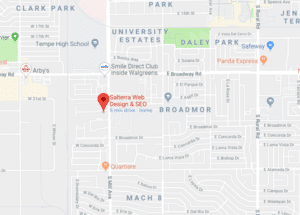
Worldwide Reach from Tempe, AZ: Though based in the vibrant city of Tempe, Arizona, Salterra serves a global clientele, extending its world-class services to businesses worldwide.
Connect With Us:
Phone: 602-641-9797
Email: hello.salterra@gmail.com
Socials: Facebook | Twitter | LinkedIn | YouTube