- Custom Tucson web design on WordPress, built for mobile responsive browsing, clear navigation, and a brand-aligned layout that supports trust and lead generation.
- Conversion-focused site structure with fast load performance considerations, cross-browser compatibility, accessibility awareness, and a build that prioritizes usability across devices.
- SEO aligned foundations baked into the build, including crawlable site architecture, semantic HTML, technical performance work, and structured data readiness for modern search and AI experiences.
Tucson Web Design for Businesses That Need Leads, Not Just a Pretty Homepage
A website in Tucson has one job: earn trust fast and move visitors toward a call, a quote request, or a booked appointment. Home service companies and medical practices compete on credibility, clarity, and speed. A clean design helps, but the real differentiator is how the site guides a visitor from first click to next step.
Salterra builds Tucson web design around user experience, conversion flow, and technical quality. That includes mobile-responsive layouts, scannable service pages, and a structure that supports SEO, local visibility, and AI-driven summaries.
What strong Tucson web design looks like for real buyers
- A clear service menu that reduces confusion
- A home page that explains who you serve, what you do, and what to do next
- Service pages that answer questions before the phone rings
- Contact paths that work on mobile, not buried in a footer
- A layout that supports trust signals, reviews, licensing, credentials, and real proof
Websites built for Tucson customers on phones
Mobile traffic dominates for local services. Visitors tap, scroll, compare, and decide quickly. Mobile responsive design keeps content readable, buttons tappable, and forms easy to submit. Salterra applies responsive design so your site adapts to screen size without breaking layout, hiding content, or slowing load time.
WordPress Web Development Built for Speed, Control, and Growth
WordPress remains the most flexible platform for businesses that want full ownership, scalable content, and clean technical SEO. It supports custom design, structured content, and integrations without locking you into a single vendor.
WordPress websites that your team can manage
A strong WordPress build supports:
- Easy page edits for staff using the block editor
- Clean URL structure for service and location pages
- Blog publishing for topical authority and long-term SEO
- Role-based access for marketing teams and admins
- Plugin governance that keeps the site stable and secure
WooCommerce when online payments, products, or deposits matter
For businesses that sell products, memberships, gift cards, or require deposits, WooCommerce provides a powerful e-commerce solution built into WordPress. It supports product pages, checkout flows, shipping rules, tax logic, and analytics, while still allowing SEO focused content around categories and services.
Conversion Focused Structure That Turns Visits Into Calls and Bookings
Design choices matter most when they reduce friction. Visitors should find what they need in one or two clicks, with a path that feels obvious.
Navigation that stays simple and predictable
Good navigation keeps services grouped logically and avoids deep menus that bury key pages. A visitor looking for a specific service should find it quickly, without having to scan 10 dropdowns. Clear navigation supports both usability and crawlability.
Page flow that answers questions in the right order
High converting pages follow a pattern:
- Confirm relevance, industry, service area, problem
- Explain the solution in plain language
- Provide proof, experience, process, outcomes
- Remove objections, pricing ranges, timing, what happens next
- Offer a clear next step, call, quote, schedule
Lead capture that feels natural, not pushy
Conversion elements work best when they match intent:
- Click to call buttons for mobile visitors
- Short quote forms for urgent service needs
- Appointment request forms for medical services
- FAQ sections that reduce repetitive calls
- Trust content that supports the decision
SEO Foundations Built Into the Website, Not Added Later
A Tucson website can look great and still underperform if it is difficult for crawlers to understand. Technical SEO starts with structure, performance, and semantic clarity.
Crawlable site architecture and internal linking
A strong foundation includes:
- Logical page hierarchy: home, services, locations, about, contact
- Internal links that connect related services and supporting content
- Clean URLs that align with page intent
- Indexable pages, no accidental blocks on key content
Semantic HTML and content structure for AI Overviews
Search systems extract meaning from headings, sections, entities, and relationships. Pages built with a clear H2 and H3 structure help models interpret:
- primary service
- supporting sub services
- service area and relevance
- differentiators and process
- credibility signals
Site speed and performance fundamentals
Performance impacts conversion and SEO. Salterra prioritizes:
- optimized images and modern formats
- caching strategy and script control
- minimized render blocking assets
- clean theme architecture
- hosting considerations that support fast response times
Security basics and stability
A rebuild should launch with security hygiene:
- SSL enabled
- updates managed
- backups scheduled
- plugin and theme governance
- form protection and spam control
Rebuilds, Redesigns, and Website Cleanups
Many Tucson businesses come to Salterra with an existing site that no longer reflects their brand, runs too slow, or fails to convert. A rebuild keeps what is valuable, then upgrades what blocks growth.
Common rebuild triggers
- outdated theme and layout
- hard to update pages
- mobile experience breaks or looks cramped
- slow load time and high bounce
- service pages too thin to rank
- unclear messaging and weak calls to action
Content migration without losing momentum
A careful rebuild protects:
- page URLs and redirects where needed
- core service pages and local relevance
- analytics continuity
- internal linking logic
- on page SEO elements such as titles and meta descriptions
Tucson Service Area Relevance That Helps Local Buyers
Tucson businesses serve customers across Pima County and nearby communities. A web design strategy benefits from clear service-area language and location logic that align with how people search.
Tucson area coverage that matches real search behavior
Local search often includes neighborhood, suburb, or nearby city modifiers. Tucson web design pages can reflect service reach across communities such as Oro Valley, Marana, Sahuarita, South Tucson, Catalina Foothills, Tanque Verde, and Vail.
Tucson market clarity without stuffing location terms
Local relevance works best when it is integrated naturally:
- service area language inside introductions and contact sections
- location context on service pages where appropriate
- locally oriented FAQs
- clear signals for maps and local intent
Salterra Web Design Process
A professional rebuild follows a defined process, ensuring design choices align with business goals and timelines.
Discovery and onboarding
The process starts with business goals, audience, services, competitors, and differentiators. This stage clarifies what to keep from the old site and what needs improvement.
Sitemap and wireframe planning
Structure comes before design. A sitemap organizes the pages required to support:
- your main services
- priority locations
- trust and credibility pages
- conversion paths
Design, revisions, and approvals
Design rounds focus on:
- layout and hierarchy
- typography and readability
- brand colors and visual style
- mobile responsive components
- calls to action that match intent
Development, QA, and launch readiness
Development includes:
- responsive build and cross browser testing
- performance checks
- form testing
- analytics readiness
- basic SEO setup
Ongoing support after launch
Websites need maintenance. Support can include updates, performance monitoring, content additions, and conversion improvements over time.
Why Salterra
Salterra brings a combined marketing and development approach, so the site is built to perform, not just to launch.
Experience, ownership, and accountability
- 14 years in digital marketing and web development
- veteran and family-owned
- award-winning work across multiple industries
- internal teams covering SEO, design, development, and schema
- leadership and education through SEO University and SEOST Digital Marketing Conference
Websites built with marketing logic
A Salterra website rebuild connects:
- design choices to conversion rate behavior
- SEO structure to crawlability and topical relevance
- content organization to user intent
- technical quality to performance and stability
Clear next steps and transparent workflow
Clients get a defined process, review checkpoints, and a build that supports future marketing, SEO, and paid ads without needing a redesign six months later.
About Tucson Arizona
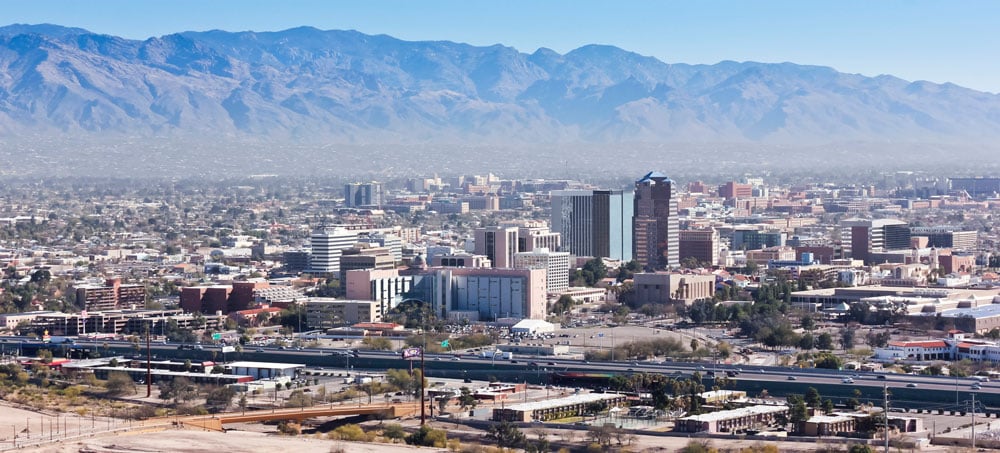
Tucson (; Spanish: Tucson, O’odham: Cuk-Ṣon) is a city in and the county seat of Pima County, Arizona, United States, home to the University of Arizona. It is the second largest city in Arizona behind Phoenix, with a population of 542,629 in the 2020 United States census, while the population of the entire Tucson metropolitan statistical area (MSA) is 1,043,433. The Tucson MSA forms part of the larger Tucson-Nogales combined statistical area (CSA). Both Tucson and Phoenix anchor the Arizona Sun Corridor. The city is 108 miles (174 km) southeast of Phoenix and 60 mi (97 km) north of the U.S.–Mexico border. Tucson is the 33rd-largest city and the 58th-largest metropolitan area in the United States (as of 2014). Central Tucson’s incorporated suburbs include Oro Valley and Marana, northwest of the city; Sahuarita, south of the city; and South Tucson, located in an enclave south of downtown.
Communities near Tucson (some within or overlapping the city limits) include Casas Adobes, Catalina Foothills, Flowing Wells, Midvale Park, Tanque Verde, Tortolita, and Vail. Towns outside the Tucson metro area include Benson to the southeast, Catalina and Oracle to the north, and Green Valley to the south. Tucson was founded as a Spanish military fort by Hugo O’Conor, who authorized the construction of Presidio San Agustín del Tucsón in 1775. It was included in Sonora after Mexico gained independence from the Spanish Empire in 1821. In 1853, the United States acquired a 29,670-square-mile (76,840 km²) region of present-day southern Arizona and southwestern New Mexico from Mexico under the Gadsden Purchase. Tucson served as the capital of the Arizona Territory from 1867 to 1877. Tucson was Arizona’s largest city by population during the territorial period and early statehood until it was surpassed by Phoenix by 1920.
Nevertheless, population growth remained strong during the late 20th century. In 2017, Tucson was the first American city designated a “City of Gastronomy” by UNESCO.The Spanish name of the city, Tucsón [tukˈson], is derived from the O’odham Cuk Ṣon [tʃʊk ʂɔːn], meaning “(at the) base of the black [hill]”, a reference to a basalt-covered hill now known as Sentinel Peak. Tucson is sometimes referred to as “The Old Pueblo”, and rightly deserves its more recent moniker as “Optics Valley” with its optical science and telescopes known worldwide.
- Population (approx.): 532,000
- Geo coordinates: 32.254°N, 110.9742°W
- Postcodes: 85705, 85719, 85724, 85721, 85745, 85701, 85716, 85740, 85723, 85720
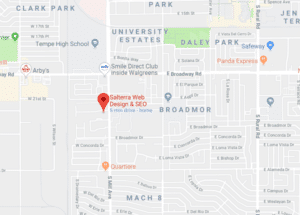
Directions To Salterra Digital Services From Tucson
Tucson Arizona
Get on I-10 W from W Grant Rd
4 min (1.7 mi)
Follow I-10 W to W Baseline Rd in Maricopa County. Take exit 155 from I-10 W
1 hr 24 min (100 mi)
Continue on W Baseline Rd to your destination
10 min (4.3 mi)
Salterra Web Services
2465 W 12th St Suite #4, Tempe, AZ 85281